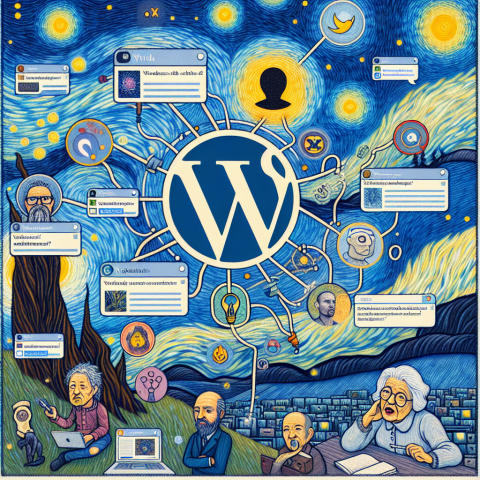
Nurturing Human Bonds In A Digital Age
By Tom Seest
At WebsiteBloggers, we help website bloggers develop strategies to create content, traffic, and revenue from website blogs based on our experiences and experimentation.
Be sure to read our other related stories at WebsiteBloggers and share this article with your friends, family, or business associates who run website blogs.
Real Connection In a Cookie-Less World
In this ever-evolving digital landscape, we find ourselves navigating a cookie-less world where connections feel fleeting, almost as if they exist in a haze of pixels and data. When you step back and truly examine what’s happening, it becomes clear that we are losing something essential: the ability to forge real, meaningful relationships. This isn’t just about privacy; it’s about empathy, understanding, and the shared experiences that make us human.
Think about it. Your favorite website or blog isn’t just a platform for content; it’s a community waiting to welcome you with open arms. Each click offers a chance to connect, to engage with others who share similar passions, struggles, and aspirations. But without reliable ways to connect, these networks can start feeling disjointed, like a web of single threads that could snap at any moment.
Consider how those ad placements used to follow you around, crafting an illusion of familiarity, but did they ever truly connect you with what you needed? Or did they just amplify noise? In this cookie-less age, there’s an opportunity to redefine what connection means. It’s about building relationships based on trust, authenticity, and shared values rather than temporary impressions dictated by algorithms.
Every time you leave a comment, share a story, or simply engage with someone’s post, you’re laying down a brick in the foundation of a much larger edifice. You’re asserting that in this digital chaos, there’s still room for sincerity and recognition. Yes, it takes effort—dare I say, courage—to present your true self and invite others in, but isn’t that what life is all about? Real engagement fosters stronger ties, and each interaction offers the chance to uplift not just ourselves but those around us.
When we emphasize the human aspect of these interactions, when we choose to be vulnerable, we create ripples of genuine connection. And those ripples transform into waves that wash over our digital environment, inviting others to join in a dance of discovery, understanding, and compassion.
So, whether you’re sharing a heartfelt post on your blog or engaging in fruitful dialogue on a website, remember: each moment spent creating and connecting is a chance to reclaim what we hold dear in a cookie-less world—our humanity.

Real Connection In a Cookie-Less World
Real Connection In a Cookie-Less World
- We are navigating a cookie-less digital world, affecting our ability to forge meaningful relationships.
- This situation transcends privacy concerns, touching on empathy and the shared experiences that define our humanity.
- Websites and blogs serve as communities, offering opportunities for connection and engagement with others.
- Without reliable ways to connect, online networks can feel disjointed and fragile.
- Ad placements have historically created an illusion of familiarity but often fail to provide genuine connections.
- In this new era, we have the chance to redefine connections based on trust, authenticity, and shared values.
- Emphasizing the human aspect of interactions allows us to foster genuine connections that uplift ourselves and others.

Real Connection In a Cookie-Less World
Table Of Contents
- Real Connection In a Cookie-Less World
- How Do We Build Genuine Relationships Without Digital Tracking?
- Can We Trust Brands That Prioritize Privacy Over Personalization?
- How Does the Cookie-Less Future Reshape Our Social Connections?
- What Ethical Considerations Arise When We Seek Online Authenticity?
- Have We Lost the Art Of Face-To-Face Communication?
- How Can We Foster Community In an Increasingly Isolated Society?
- What Role Do Personal Stories Play In Creating Real Connections?
- Conclusion
- Other Resources
- Glossary Of Terms
- Other Questions
- Haiku
- Poem
- Checklist
How Do We Build Genuine Relationships Without Digital Tracking?
Building genuine relationships in a world increasingly dominated by digital tracking is both an art and a necessity. It starts with the simple yet profound idea that we’re all human beings looking for connection. No smart algorithm can replace the warmth of a true smile or the comfort of a conversation about the struggles we face. In our rush to document every moment online, we often forget the power of authenticity.
Imagine walking into a local coffee shop, and instead of scrolling through your phone, you engage the barista. You ask her about her day, and in return, she shares a story that reveals a little piece of her world. That moment is unmeasurable, grounded in the kind of shared experience that builds trust. The stories we share, the laughter we experience, and even the tears we shed create threads in the fabric of our relationships that no digital tracking can replicate.
Rationally speaking, studies show that real-life interactions foster emotional intelligence and resilience. When we invest time in face-to-face connections, we not only improve our mental health but also enrich our social networks. Each conversation is a brick laid in the foundation of relationships that stand the test of time. On this website blog that seeks to explore meaningful connections, we find practical suggestions to step away from our screens and step into our communities.
Ethically, building relationships rooted in transparency and consent is essential. Instead of monitoring behavior through clicks or likes, let’s start by being present. Invite someone to share a meal or engage in a community project. These actions speak volumes about your intention to cultivate genuine connections. Let empathy and understanding guide you—because in the end, it’s not about the number of followers we have online but the depth of the relationships we nurture offline.
The narrative is clear: when we turn away from digital tracking and turn toward one another, we create a culture of connection, where relationships flourish and communities thrive. So, grab your favorite book, join a local sports team, or volunteer at a nearby charity. Take that step today, and find the beauty and fulfillment that comes from investing in people rather than pixels. It’s time we reconnect—not just through screens, but heart to heart.

How Do We Build Genuine Relationships Without Digital Tracking?
How Do We Build Genuine Relationships Without Digital Tracking?
- Building genuine relationships is both an art and a necessity in a digitally dominated world.
- Authenticity and human connection are irreplaceable by technology, emphasizing the importance of face-to-face interactions.
- Engaging in real-life conversations fosters trust and creates shared experiences that deepen connections.
- Studies indicate that personal interactions enhance emotional intelligence and resilience and improve mental health.
- It is important to cultivate relationships based on transparency and consent rather than digital metrics.
- Focusing on empathy and understanding is essential for nurturing deeper offline relationships.
- Taking action to engage with others—like volunteering or joining local teams—can enhance community well-being and personal fulfillment.

How Do We Build Genuine Relationships Without Digital Tracking?
Can We Trust Brands That Prioritize Privacy Over Personalization?
In a world awash in data, where every click, swipe, and scroll is meticulously cataloged, the notion of privacy has become a fleeting whisper against the roar of personalization. Yet, brands that hold up privacy as a banner might just win our hearts, minds, and ultimately, our loyalty. When a company prioritizes privacy, they send a powerful message: Your autonomy matters. It’s not just about algorithms predicting your every move; it’s about trust. This trust builds a bridge, connecting us not only with brands but with communities, shared values, and common ground.
Think about it. When you visit a website or read a blog, you might feel that niggling hesitation in the back of your mind. Is my information being harvested for profit? Are my habits being tracked and sold off to the highest bidder? Brands that eschew the temptation of overreach strike a tone of integrity. They recognize that earning your confidence isn’t merely a marketing strategy; it’s an ethical imperative. This resonates deep within, making us not just consumers but allies in a cause bigger than ourselves.
Imagine a world where our data is respected, not exploited. Picture brands that refuse to trade your personal stories for cold, hard cash. Those brands invite you to engage not as a mere statistic, but as a valued individual. They could become trusted allies—guardians of our digital lives—who understand that privacy isn’t just another line in a terms of service agreement; it’s the bedrock upon which trust is built.
And this isn’t just an appeal to reason; it’s instinctual. Our guts tell us when something feels off. We’ve seen the fallout when trust erodes—scandals remind us that safety and privacy matter, not just in our private lives, but in the public square. It’s about accountability, too—brands have a responsibility to treat our information with care, to honor the boundaries of our comfort zones.
So, when we find brands that champion privacy, we see more than just a marketing strategy; we see a commitment to the values we hold dear. It’s an invitation to rise above mere consumerism and to forge connections grounded in respect and understanding. When we opt for brands that protect our privacy, we choose not just a product, but a shared vision for a future where integrity, trust, and community reign supreme.

Can We Trust Brands That Prioritize Privacy Over Personalization?
Can We Trust Brands That Prioritize Privacy Over Personalization?
- In a data-driven world, privacy is increasingly overshadowed by personalization.
- Brands prioritizing privacy can earn customer loyalty by conveying that autonomy matters.
- Trust connects consumers with brands, fostering community and shared values.
- Consumers are wary of data harvesting and prefer brands that uphold integrity.
- Respecting personal data transforms consumers into allies rather than statistics.
- Accountability is crucial; brands must care for consumer information and boundaries.
- Choosing privacy-focused brands leads to connections based on respect and a vision for integrity.

Can We Trust Brands That Prioritize Privacy Over Personalization?
How Does the Cookie-Less Future Reshape Our Social Connections?
In a world that carves connections out of data, the idea of a cookie-less future feels like stepping into uncharted territory—an adventure that evokes both excitement and trepidation. Think about it: for years, every click, every glance at a product, every scroll down a page was meticulously tracked, creating detailed profiles to serve targeted ads. It shaped our online lives, creating a false sense of intimacy. But now, we face a crucial crossroads. Without cookies, our digital interactions will become more organic, more personal, akin to meeting a neighbor rather than a marketing machine.
Imagine traversing a landscape where our online personas are less defined by algorithms and more by authentic connections. Websites and blogs can foster real dialogue, not just transactions. By moving away from intrusive tracking, brands have an opportunity to shift their focus towards building relationships grounded in trust and transparency. This isn’t just about efficiency; it’s an ethical choice that says, “We value you more than the data you produce.”
The rational mind acknowledges that fewer cookies mean less targeted advertising, but the heart sees an opportunity. It yearns for human connection, for conversations that breathe life into our interactions. We can engage with content that resonates with us personally, free from the pressure of constant surveillance. Picture a community where your interests are nurtured not by a cleverly crafted algorithm, but by shared stories and genuine experiences.
Let’s embrace this transition, not as a loss but as a reinvigoration of the human spirit. As businesses pivot their strategies, they’ll learn that the authority built through honesty and genuine content will ultimately be more effective than any cookie could offer. When a brand speaks directly to your values without the sheen of manipulation, you can’t help but feel a spark—a kinship that binds us together, not as consumers, but as members of a community.
So, here’s the rallying cry: It’s time to take this leap into the cookie-less future. Embrace the potential it holds for richer conversations and deeper connections. As we navigate this change, let’s cultivate an online landscape where trust triumphs over tactics, and connection transcends mere convenience. The time to strengthen our digital relationships is now, because at the end of the day, it’s our bonds—formed not by the crumbs of data, but by the fullness of our shared experiences—that truly matter.

How Does the Cookie-Less Future Reshape Our Social Connections?
How Does the Cookie-Less Future Reshape Our Social Connections?
- The cookie-less future represents a shift towards more organic and personal online interactions.
- For years, detailed data tracking shaped online experiences and relationships with brands.
- Without cookies, there’s a chance to build genuine connections and foster real dialogue.
- Brands can focus on trust and transparency rather than intrusive tracking and targeted ads.
- This transition is an ethical choice that values people over data.
- Engaging content can emerge through shared stories rather than algorithms.
- Strengthening digital relationships based on shared experiences is essential for the future.

How Does the Cookie-Less Future Reshape Our Social Connections?
What Ethical Considerations Arise When We Seek Online Authenticity?
In the vast world of the internet, where a single post can ignite passionate debates or rally communities, the pursuit of online authenticity can hinge on one significant question: What price are we willing to pay for genuine expression? Behind every carefully curated photo or heartfelt blog post lies a complex web of ethical considerations that touch our hearts, challenge our minds, and tug at our sense of right and wrong.
Take a moment to think about it. How often do we find ourselves scrolling through a website that feels almost too polished, too perfected? It’s as if we’re peering through a window, desperate to connect, yet acutely aware of the façade. This speaks to a deeper social issue: the pressure to conform to an ideal—crafted, filtered, and edited—leads us to question our authenticity. We risk losing the rawness of human experience in favor of a highlight reel that only serves to obscure the struggles and triumphs that bind us together.
In our quest for connection and belonging, we must ask ourselves: are we fostering an environment that encourages vulnerability or one that promotes superficiality? The narrative of online authenticity isn’t just about transparency; it’s also about responsibility. When we choose to share, we wield a kind of authority—an influence that can uplift or undermine. This power should compel us to act ethically, thinking critically about how our words and images may resonate with others.
Consider the small business owner who bravely documents their journey online, revealing both successes and failures. Their authenticity fosters trust—not just in their brand but in their humanity. This creates a ripple effect, encouraging others to share their stories and embrace their imperfections. Each narrative, intertwined, builds a community that celebrates authenticity over artifice, reminding us that we are not alone in our struggles.
So, when we chase online authenticity, let it come from a place of courage. Let’s be willing to share the messy, imperfect parts of our lives alongside our victories. By doing so, we don’t just express ourselves; we invite others to join us on this journey of clarity and connection. In a world often clouded by inauthenticity, our greatest power lies in the strength of our truth. Let’s wield it wisely.

What Ethical Considerations Arise When We Seek Online Authenticity?
What Ethical Considerations Arise When We Seek Online Authenticity?
- The internet fosters passionate debates and community, raising the question of the cost of genuine expression.
- Curated content often hides a complex web of ethical considerations related to authenticity.
- Polished online personas can create a façade, distancing individuals from genuine connections.
- Social pressure to conform overshadows real human experiences, promoting superficiality over vulnerability.
- Online authenticity requires responsibility and ethical sharing, influencing the experiences of others.
- Sharing both successes and failures fosters trust and encourages a community that values authenticity.
- Embracing imperfections alongside achievements invites deeper connections, empowering individuals to express their truth.

What Ethical Considerations Arise When We Seek Online Authenticity?
Have We Lost the Art Of Face-To-Face Communication?
In a world where a notification ding can drown out the sound of a heartfelt conversation, have we let the real art of face-to-face communication slip through our fingers? Imagine for a moment, sitting across from someone you care about—the warmth of their presence, the spark in their eyes as a shared story unfolds. This is the essence of true connection, yet all too often, it gets replaced by a scrolling screen.
The truth is, we are hardwired for interaction. Psychologists tell us that personal, face-to-face contact releases oxytocin, the “bonding hormone,” fostering trust and empathy. Think about it: when was the last time a text message made you feel genuinely understood? While a website or blog can provide valuable information, it lacks the nuances—the laughter, the pauses, the shared glances—that define our humanity. We need to engage our hearts, heads, and guts, and recognize that behind every screen is a real person with experiences and emotions.
Let’s consider the stories we tell ourselves. Maybe we think texting is easier or more efficient, but it’s akin to painting a masterpiece with only one color; it lacks depth. Allow yourself to remember that the most profound connections often happen in moments of vulnerability. When we communicate effectively face-to-face, we learn to listen, to empathize, to truly engage with one another. The bonds formed in these moments pave the way for collaboration, creativity, and understanding—essential elements in any healthy community or workplace.
Ethically, we must question the impact of this digital age on our relationships. Are we sacrificing our ability to connect meaningfully for the sake of convenience? If we stand by and watch this happen without making adjustments, we could be paving the way for a society that values instant gratification over lasting connections.
It takes courage to step away from the screen and immerse ourselves in real conversations, but that effort pays off. When we prioritize face-to-face communication, we not only enrich our own lives but also uplift those around us. Each small action counts. So let’s make a conscious effort to reconnect, to revitalize our communication skills, and to foster a culture where authentic conversations thrive, leading to a more compassionate world. Let’s not just communicate; let’s truly connect.

Have We Lost the Art Of Face-To-Face Communication?
Have We Lost the Art Of Face-To-Face Communication?
- The rise of digital communication has diminished the art of face-to-face interaction.
- Personal interactions release oxytocin, promoting trust and empathy.
- Text messages often lack the emotional depth found in direct communication.
- Meaningful connections occur in moments of vulnerability during face-to-face conversations.
- Digital convenience may undermine our ability to forge lasting relationships.
- Prioritizing real conversations can enrich lives and foster community bonds.
- Consciously reconnecting and enhancing communication skills can create a more compassionate world.

Have We Lost the Art Of Face-To-Face Communication?
How Can We Foster Community In an Increasingly Isolated Society?
We live in a world that’s hyper-connected yet profoundly isolated, where pixels replace people and algorithms overshadow authentic interactions. Every day, we scroll past countless feeds, filling our minds with curated lives, but what’s often missing is the heartbeat of real community. It’s time to roll up our sleeves and reconnect.
Building community starts with stepping outside our front doors. It’s easy to retreat into our digital bubbles, but when we engage face-to-face, we begin to weave the fabric of connection. Host a neighborhood gathering. The magic happens over shared meals and laughter, where the stories of our lives unfold like chapters in a book, each as compelling as the last. These gatherings offer a space for vulnerability, allowing us to drop our armor. When we share our struggles—be it parenting, job loss, or simple isolation—we find we’re not alone in our battles. In those moments, the ties that bind us grow stronger.
Think about it: our brains are wired for connection. When we help a neighbor fix their fence or join a local volunteering effort, we are not just lending a hand; we are creating an ecosystem where goodwill thrives. The mere act of helping reinforces our sense of self and purpose, providing a gut-wrenching reminder that we all belong to something bigger than ourselves. It’s a cycle of giving that reinforces community pride, encouraging others to do the same.
But it doesn’t stop there. This isn’t just a warm-fuzzy feeling. The ethical implications of our isolation are profound. When we choose to engage with our community, we are standing up against loneliness—a silent epidemic affecting millions. We’re sending a message that we care. And those small acts stack up, building a foundation of trust that ripples throughout our neighborhoods.
Consider the power of local initiatives. When we support a community garden, we aren’t just planting seeds; we’re planting hope. We’re inviting the next generation to understand the joy of working together for a common goal, reinforcing that contribution matters. Each flower that blooms isn’t just a splash of color; it’s a testament to collaboration.
Let’s not be passive consumers of connectivity. Instead, let’s become active participants in our communities. Visit a local community center or check out a neighborhood website or blog. Take the plunge. It’s our hands that will shape the world around us, and by fostering genuine connections, we can combat isolation and enrich our lives. Together, let’s reclaim the spirit of community—one handshake, one meal, and one conversation at a time.

How Can We Foster Community In an Increasingly Isolated Society?
How Can We Foster Community In an Increasingly Isolated Society?
- We live in a hyper-connected world yet feel isolated, with digital interactions overshadowing personal connections.
- Building community requires stepping outside our digital bubbles and engaging in face-to-face interactions.
- Neighborhood gatherings foster genuine connections through shared meals and stories, creating spaces for vulnerability.
- Actively helping others, like volunteering or assisting neighbors, builds goodwill and reinforces our sense of belonging.
- Engaging with the community combats the loneliness epidemic, sending a message of care and building trust.
- Supporting local initiatives, like community gardens, cultivates collaboration and inspires future generations.
- We should shift from passive consumers of connectivity to active participants, enriching lives through genuine connections.

How Can We Foster Community In an Increasingly Isolated Society?
What Role Do Personal Stories Play In Creating Real Connections?
In a world overflowing with information, it’s easy to feel disconnected, as if we’re just faces in a crowd, each of us a solitary story lost amid the noise. Yet, personal stories are the lifeblood of authentic connection. They serve as bridges between our hearts, minds, and experiences. When someone pulls back the curtain and shares a piece of their journey, it invites us in. Suddenly, we’re not just listeners; we become participants in a shared narrative, enveloped in the warmth of empathy.
Every personal tale carries a thread of relatability that binds us. Think about it: have you ever found yourself laughing, crying, or nodding in agreement when someone recounts their challenges, triumphs, or everyday shenanigans? It turns out these moments resonate because they mirror our own experiences, reminding us that we’re not alone in our struggles or joys. When we shed our armor and reveal our vulnerabilities—be it a hard lesson learned or a victory won—we pave the way for others to do the same. This mutual sharing cultivates trust, a rare commodity in today’s fast-paced, self-absorbed world.
From a rational standpoint, personal stories are powerful tools for persuasion and influence. They establish credibility and demonstrate authenticity. When we share our own stories, we illustrate real-life results, reinforcing our authority while humanizing our message. It’s one thing to throw around statistics and data; it’s another to anchor those facts to a compelling narrative that sticks. People remember stories—they don’t just pass through the mind; they settle in the gut, sparking action and inspiring change.
This is ethics at play, too. Each story carries the weight of our values and beliefs. By sharing our truths, we invite others to reflect on their own values, ultimately fostering a culture of openness and trust. We create space for compassion in discussions that often feel polarized or contentious.
In an age where social media often skews our perceptions, genuine connection feels like a lost art. Yet, when we engage in heartfelt storytelling, we dismantle the barriers and embrace our shared humanity. So, whether it’s a poignant moment on a website or a lighthearted exchange on a blog, remember that every personal story shared strengthens the fabric of community and reignites the spark of connection. The stories we tell are what make us not just individuals, but part of something bigger—together in this beautifully imperfect journey we call life.

What Role Do Personal Stories Play In Creating Real Connections?
What Role Do Personal Stories Play In Creating Real Connections?
Here is a bulleted summary formatted as an HTML list:
- In a world filled with information, personal stories create authentic connections.
- Sharing personal narratives invites empathy and fosters participation in shared experiences.
- Relatable tales remind us of our shared struggles and joys, promoting vulnerability and trust.
- Personal stories are effective tools for persuasion, establishing credibility and authenticity.
- Facts are more impactful when anchored to compelling narratives, inspiring action and change.
- Each story reflects our values and beliefs, fostering openness and trust in discussions.
- Heartfelt storytelling dismantles barriers, strengthens community, and highlights our shared humanity.

What Role Do Personal Stories Play In Creating Real Connections?
Conclusion
In the fast-paced digital landscape, where connections can feel more like flickers of light than lasting bonds, it’s time to take a step back and reflect on the real essence of human connection. As we navigate this cookie-less world, designed for tracking our clicks and behaviors, we’re gifted with an unexpected opportunity to reclaim what truly matters: the depth of our relationships. This isn’t merely a call to action; it’s a heartfelt invitation to reconnect with ourselves and each other. Each one of us craves connection, not just for the sake of social media likes but for the warmth of authentic interaction.
Think about the power of a simple conversation—observing a neighbor’s smile, hearing their stories, or sharing laughter over a cup of coffee. These moments form the building blocks of community, threading our narratives together in a web of shared experiences. When we prioritize building relationships grounded in trust, empathy, and authenticity, we turn the lens away from mere numbers and statistics. Instead, we discover the beauty of vulnerability that fosters collaboration and understanding, turning strangers into allies.
Rationally speaking, studies often underscore the mental health benefits of face-to-face interactions, where we can truly see and hear one another. In a world driven by algorithms that dictate our engagements, it’s essential to elevate these human connections through real stories—our tales of struggle and triumph resonate with others and remind us of our shared humanity. They create trust, which is crucial in nurturing lasting relationships.
Ethically, we have a responsibility to cultivate an environment that values openness and integrity over superficial spectacle. Choosing to share our authentic experiences allows us to draw others into the narrative, creating a culture rooted not just in connection, but in compassion. Brands championing privacy in this new digital era are not just protecting data; they’re prioritizing a future where our personal stories are treasured, not exploited.
As we step into this cookie-less future, let’s reclaim the spirit of community—not just in the virtual realm, but in our everyday lives. Let’s engage courageously, listen attentively, and share generously. Being present and fostering genuine relationships isn’t just a nostalgic return to the past; it’s an evolving journey into a future where every handshake, meal shared, and heartfelt conversation serves as one more brick in the foundation of a compassionate, connected society. Together, we can redefine what it means to connect, turning fleeting digital interactions into lasting bonds that enrich our lives. It’s time for us to embrace the beauty of real connection, heart to heart.

Conclusion
Conclusion:
- Reflect on the essence of human connection in a fast-paced digital landscape.
- Opportunity to reclaim the depth of our relationships in a cookie-less world.
- Value authentic interactions over superficial social media engagements.
- Simple conversations and shared experiences form the foundation of community.
- Prioritize trust, empathy, and authenticity to foster collaboration and understanding.
- Share personal stories to create trust and nurture lasting relationships.
- Embrace genuine relationships as a journey towards a compassionate, connected society.

Conclusion
Other Resources

Other Resources
Here is a list of other resources you can review online to learn more:
- Flowrite.com
- GDPR
- Writesonic.com
- Analisa.io
- Bubble.io
- Checkio.org
- Booth.ai
- Bitrix24
- Shortwave.com
- Resemble.ai
- Writecream.com
- Otter.ai
- Monkeylearn.com
- ParagraphAI
- Dubverse.ai
- Aiva.ai
- Chorus.ai
- Playgroundai.com
- Evoto.ai
- Aidungeon.io
Use This Prompt To Get More Resources With Your Favorite Online AI Tool: Please provide me with a list of online articles with their URLs in a bulleted list that I can read regarding Real Connection In a Cookie-Less World

Other Resources
Glossary Terms
Real Connection In a Cookie-Less World – Glossary Of Terms
1. Cookie: A small piece of data stored on a user’s device by their web browser while browsing a website, traditionally used for tracking and personalization.
2. Cookie-Less: Referring to web browsing or digital marketing practices that do not rely on cookies to collect user data for tracking and advertising purposes.
3. Privacy: The right of individuals to control their personal information and how it is collected, used, and shared, particularly online.
4. Tracking: The process of monitoring user behavior across online platforms, often achieved through cookies or analogous technologies.
5. User Experience (UX): The overall experience a user has when interacting with a website or digital product, influenced by usability and design.
6. First-Party Data: Information collected directly from users by a company or website, often through forms, purchases, or interactions.
7. Third-Party Data: Information collected by entities that do not have direct interaction with the user, often used for advertising and analytics.
8. Contextual Advertising: Ads that are displayed based on the content being viewed, rather than on user tracking data, promoting relevance without personal information.
9. Privacy Policy: A legal document outlining how a company collects, uses, and protects user data, fostering transparency and trust.
10. Analytics: The analysis of data collected about user interactions, often used to improve services and understand audience behavior.
11. Consent: The permission given by users to collect and use their data, often required by regulations like GDPR and CCPA.
12. Data Minimization: The principle of limiting data collection to only what is necessary for a specific purpose, enhancing user privacy.
13. User-Centric Design: An approach to product design focused on the needs, preferences, and behaviors of users to improve satisfaction and engagement.
14. Engagement: The interaction and involvement of users with content or services, critical for building authentic connections and brand loyalty.
15. Transparency: Openness in communication with users regarding data practices, empowering them to make informed decisions.
16. Ethical Marketing: Marketing practices that prioritize ethical considerations, focusing on respect for user privacy and honesty in data use.
17. Digital Identity: An individual’s online persona composed of various digital data points, including user preferences, behavior, and interactions.
18. Data Sovereignty: The concept that data is subject to the laws and regulations of the country where it is collected and stored.
19. Personalization: Customizing user experiences based on individual preferences and behaviors, facilitated by data analysis but challenged in a cookie-less environment.
20. Alternative Identifiers: Methods of recognizing users without traditional cookies, such as device fingerprinting or user logins.
21. Trustworthiness: The degree to which users feel confident that an organization will protect their data and act in their best interest.
22. Behavioral Advertising: A form of advertising that uses user data to target ads based on individuals’ previous behavior online, now adapting to new privacy norms.
23. Pseudonymous Data: Data that has been anonymized to remove identifying information, allowing for analysis while protecting individual privacy.
24. Regulatory Compliance: Adhering to laws and guidelines governing data collection, user privacy, and online marketing practices.
25. Community Building: The practice of fostering relationships among users or customers, creating connections that transcend traditional marketing approaches.
26. Omnichannel Strategy: A marketing approach that integrates various channels and touchpoints to create a cohesive user experience across platforms.
27. Engagement Metrics: Quantitative measures used to evaluate user interactions with content, helping organizations assess the effectiveness of their strategies.
28. Decentralized Identity: A model of user identity management that enables individuals to control their personal data without relying on centralized authorities.
29. Audience Segmentation: The process of dividing a target audience into smaller groups based on specific characteristics to tailor marketing efforts effectively.
30. Relational Marketing: Focusing on long-term customer relationships rather than short-term sales, emphasizing connection and engagement in communication.

Glossary Of Terms
Other Questions
Real Connection In a Cookie-Less World – Other Questions
If you wish to explore and discover more, consider looking for answers to these questions:
- What are the best practices for maintaining personal connections in a cookie-less world?
- How can individuals ensure their privacy while still seeking meaningful online interactions?
- What are the implications of losing digital tracking on marketing strategies?
- How can brands leverage transparency to build better relationships with consumers?
- What types of activities can foster face-to-face communication in our daily lives?
- What role do social media platforms play in fostering or hindering authentic connections?
- How can community initiatives help combat isolation in modern society?
- What specific steps can people take to create a more connected environment in their communities?
- How can storytelling be used effectively in various forms of communication to enhance connection?
- What challenges do individuals face when trying to cultivate genuine relationships in online spaces?
- How can we measure the effectiveness of community-building efforts?
- What role does empathy play in nurturing digital relationships?
- How can we encourage vulnerability in online interactions to foster deeper connections?
- What are the consequences of superficial interactions in our emotional well-being?

Other Questions
Haiku
Real Connection In a Cookie-Less World – A Haiku
In a world of screens,
Hearts and stories seek solace,
Real bonds bloom once more.

Haiku
Poem
Real Connection In a Cookie-Less World – A Poem
In this cookie-less world where pixels reign,
Connections grow faint, a fleeting refrain.
We scroll through the noise, longing to feel,
Yet miss the warm touch of what’s truly real.
Empathy wanes in the digital haze,
As algorithms guide us through virtual maze.
Yet each comment, each share, each brave little word,
Builds bridges of trust, where meaning is heard.
Step from the screen, embrace the stark light,
Engage in the warmth of a neighbor’s insight.
A simple exchange, a shared cup of cheer,
Binds us together, erasing the fear.
True humanity thrives in stories we share,
In laughter and tears, in moments laid bare.
Every tale told, a thread spun tight,
Creates a rich tapestry of shared delight.
Brands that show care, in privacy trust,
Invite us to join, as allies robust.
Not just data points, but hearts intertwined,
A vision where dignity and respect are aligned.
Face-to-face chats spark the bonds we hold dear,
While scrolling through feeds feels lonely and sheer.
Let’s gather with purpose, let’s host and connect,
Transforming our world, with kindness erect.
In building a community, we challenge the gloom,
Turning isolation into a vibrant bloom.
So let’s reclaim connection, in the heart’s gentle mode,
For it’s love that we cultivate, our true common code.
With each personal story, we nurture and grow,
Reminding each other we’re never alone.
In this beautifully flawed, collective embrace,
We find strength and solace in the human race.

Poem
Checklist
Real Connection In a Cookie-Less World – A Checklist
Connection Checklist: Nurturing Relationships in a Cookie-Less World
Heartfelt Engagement
_____ Share a personal story on your blog or social media to open up meaningful dialogue.
_____ Participate in a local gathering or community event to foster warmth and connection.
_____ Practice vulnerability by discussing your struggles with friends or family.
Intellectual Reflection
_____ Reflect on how digital interactions affect your ability to connect authentically.
_____ Identify opportunities to engage in face-to-face conversations rather than relying on screens.
_____ Assess the brands you support and their commitment to privacy and ethical practices.
Ethical Considerations
_____ Consider the impact of your online presence: are you promoting authenticity or a curated facade?
_____ Make a conscious effort to engage transparently and respectfully in discussions.
_____ Volunteer for a local charity or community project to actively contribute to your surroundings.
Authority and Influence
_____ Share inspiring stories that illustrate your values and experiences with others.
_____ Utilize storytelling to communicate complex ideas or information effectively.
_____ Mentor someone in your field or community to reinforce the importance of personal connection.
Social Responsibility
_____ Engage with neighbors; ask them about their lives to create a sense of belonging.
_____ Connect with local businesses that prioritize community relationships over mere transactions.
_____ Start or join a group or club that fosters shared interests to build a supportive network.
Intuitive Action
_____ Trust your instincts when something feels off about a brand’s approach to privacy.
_____ Make an effort to turn off digital distractions during conversations to enhance presence.
_____ Embrace the discomfort of stepping out of your comfort zone to cultivate deeper relationships.
This checklist serves as a guide for reclaiming authentic connections in the digital age, encouraging both personal growth and community engagement.

Checklist
At WebsiteBloggers, we help website bloggers develop strategies to create content, traffic, and revenue from website blogs based on our experiences and experimentation.
Be sure to read our other related stories at WebsiteBloggers and share this article with your friends, family, or business associates who run website blogs.